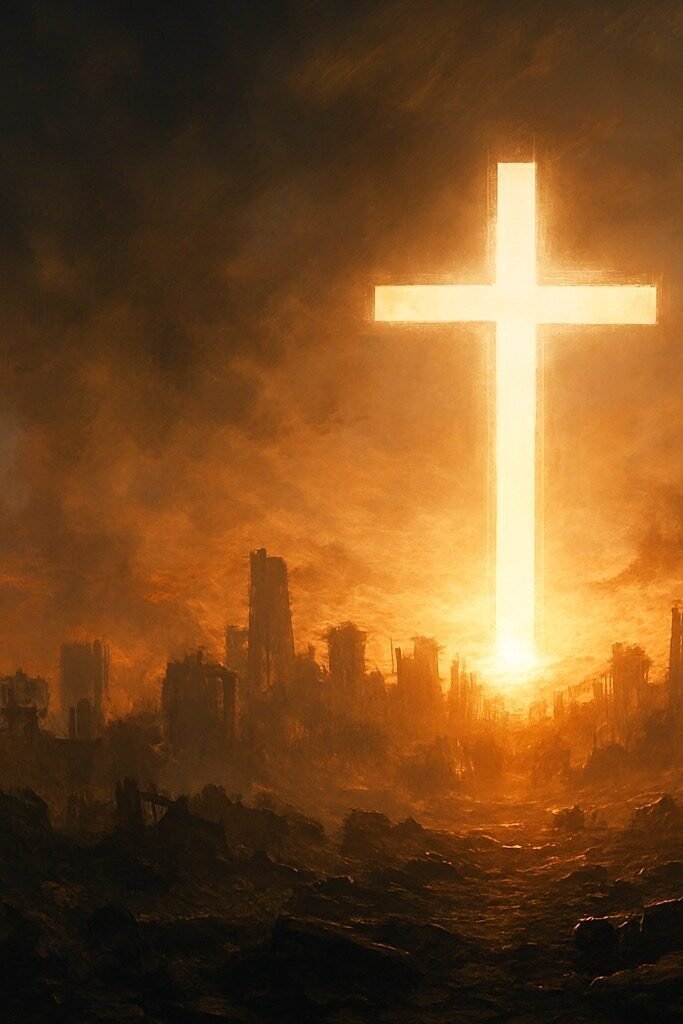

The Necessity of Evil
Living with Hope in a Fallen World
Sometimes, when we look around, we can’t help but wonder—why is the world like this? Why so much pain, injustice, and evil? Why are there earthquakes, floods, wars, and heartbreaks that seem to never end?
It’s not a new question. From the time humans began to think, we’ve been asking it. But Peter gives us a clue when he says, “Don’t be surprised at the painful trial you are suffering.” In other words—this is not strange.
Pain, evil, and suffering, as tragic as they are, are not foreign intruders in our story. They are signs—symptoms—telling us that something deeper is wrong.
The World’s Warning Lights
Think of it this way. When the “check engine” light flashes on your car dashboard, you don’t curse the light and smash it with your hand. You know it’s trying to tell you something—that there’s trouble under the hood.
In the same way, evil and suffering in our world are like that warning light. They tell us the engine of creation is not running the way it should. Something has gone terribly wrong—and the Bible doesn’t hide that truth from us.
The root problem is not just a lack of education, government failure, or moral decline. It’s something far deeper. It’s sin.
When sin entered the human heart in Eden, the whole world caught the infection. Every earthquake, every disease, every act of cruelty is a symptom of that sickness. The world still bears the scar of that first rebellion.
Sin, at its core, is human beings trying to live independently from God. And that rebellion didn’t just affect our souls—it rippled through creation itself. That’s why Paul says in Romans 8 that “the whole creation groans.”
The Pain that Points Us to God
But here’s the strange and redemptive truth:
God allows this brokenness not to destroy us—but to awaken us.
Every time we encounter pain, we’re reminded that this world is not home. Every time tragedy strikes, it shakes our illusion that we can build heaven on earth by our own hands.
God uses the discomfort of evil to create in us a longing for what’s truly good. It’s like a homesickness that won’t go away.
Have you ever met someone who came to faith not in times of comfort, but in the middle of suffering? It’s often when the ground shakes beneath our feet that we finally look up.
The Earthquake That Changed a Life
I once heard the story of a man who lived through a devastating earthquake. His home was reduced to rubble in seconds. As he stood in shock, he realized everything he’d worked for—his business, his plans, his possessions—were gone. But then, as he searched the ruins, he found his family alive. They were all safe.
Later, when asked what he learned, he said quietly, “I lost everything I thought was important, and that’s when I found what really matters.”
Isn’t that what pain does? It strips away our illusions and reveals what truly has weight. Evil, though it’s not good, can still serve a redemptive purpose—it jolts us awake to the reality that life is fragile, and our ultimate hope cannot be built here.
A World Awaiting Its Expiry
Peter, in his second letter, gives us a sobering vision of what’s coming:
This is not poetic exaggeration. It’s a divine reminder that everything around us—no matter how advanced, beautiful, or secure—will one day come to an end.
We’re constantly trying to delay decay, to outsmart nature’s course. We invent better technology, safer buildings, stronger medicines. We construct embankments to hold back floods and hospitals to fight diseases.
And that’s not wrong—these are incredible displays of human creativity and God-given wisdom. But even with all our brilliance, we cannot turn this broken world into paradise.
Spurgeon said it well:
“Ah, believer, it is only heaven that is above all winds, storms, and tempests; God did not cast man out of paradise, that he might be able to find himself another paradise in this world. The world and you must part, or Christ and you will never meet.”
We can’t build another Eden here. But there is another one—waiting, promised, and prepared.
The Promise of a New World
That’s our hope. The story doesn’t end with the burning of the old but with the birth of the new.
Evil will not have the final word.
Pain will not reign forever.
Death itself will die.
And that’s because God has already dealt with the root problem—sin—through Jesus Christ.
When Jesus died on the cross, He took upon Himself the full weight of evil. Every rebellion, every injustice, every curse fell on Him. In that dark moment, all the world’s sin met God’s perfect justice. And through His resurrection, He shattered the power of death forever.
That’s why we can face a broken world with hope.
That’s why we can grieve, yet not despair.
Because we know that what Christ began at the cross, He will finish when He returns.
The Invitation
But here’s the part we can’t ignore.
The new heaven and new earth are not automatic destinations.
God invites us—but He will not force us. The choice is ours.
He says, “Come.”
Come out of your rebellion.
Come out of your self-sufficiency.
Come and receive the life that never ends.
It’s not about escaping the world—it’s about being made new for the world that’s coming.
The Burning Candle
Imagine a small candle in a dark room. It flickers and struggles, surrounded by shadows. That’s what our life feels like in this fallen world. But one day, when the sun rises, that candle won’t be needed anymore.
In the same way, the little light of faith that we hold now—though fragile—points us toward a greater dawn. One day, when Christ returns, we won’t need faith or hope anymore, because we’ll see Him face to face.
Until then, the presence of evil keeps reminding us: this is not all there is.
Living Between Two Worlds
So what do we do while we wait?
We live faithfully in a broken world—doing good, showing mercy, building what we can, but never mistaking this place for home.
We grieve, yes—but we grieve with hope.
We fight injustice—but we know ultimate justice is coming.
We care for creation—but we know creation itself longs for redemption.
Every act of kindness, every prayer, every tear becomes part of the story of God restoring what was lost.
Closing Thought
Evil exists—not because God is powerless, but because He is patient.
He’s giving the world time to turn back to Him.
And until that day comes, every pain and every trial whispers this truth:
This world is fallen—but not forsaken.
There’s another world coming, radiant and eternal, where evil will be no more and where God Himself will wipe away every tear.
So don’t lose heart when you see evil rise. Let it turn your eyes upward.
Let it deepen your longing for the One who makes all things new.
Core Truth:
Evil reminds us that this world is broken—but also that redemption is real, and heaven is near.
Closing Poem
Though evil reigns and shadows stay,
They point us to a brighter day.
For Christ has broken sin’s decree—
A new world dawns, where we are free.